Identifying Problems worth Solving in Civil Engineering: SSDF at BUILDING BHARAT SAMPAARK
Table of Contents
- Introduction: Why Identifying the Right Problems Matters in Civil Engineering
- The Importance of Problem-Led Innovation in Infrastructure Development
- Construction Quality: Ensuring Durability and Performance
- Safety in Civil Engineering: Moving Beyond Compliance
- Sustainability in Construction: From Policy to Practice
- Building Resilient Infrastructure for Long-Term Reliability
- Innovation in Infrastructure Asset Management
- SSDF’s Role at Building Bharat Sampaark
- Conclusion: Solving the Right Problems for Future-Ready Infrastructure
India is witnessing unprecedented growth in infrastructure, spanning highways, metros, airports, industrial corridors, and urban development. As the country advances toward Viksit Bharat 2047, the challenge before the civil engineering sector is not merely to build faster, but to build with quality, safety, sustainability, and long-term resilience.
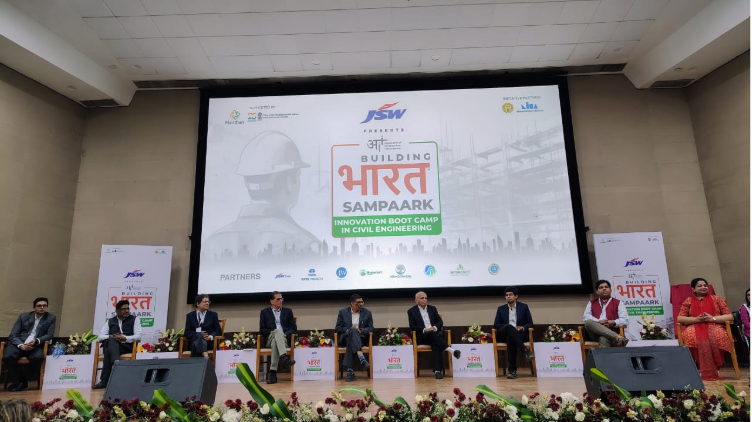
These priorities were central to discussions at The Building Bharat Sampaark – Civil Engineering Innovation Boot Camp, where the Safety Skill Development Foundation (SSDF) participated with a focused session on identifying problems worth solving in civil engineering. SSDF highlighted that innovation must begin with clearly defined problem statements rooted in on-ground realities and lifecycle thinking.

Many infrastructure projects continue to face quality failures, safety incidents, environmental trade-offs, and premature asset deterioration. These outcomes often stem not from lack of technology, but from poorly identified problems during planning, design, and execution. SSDF emphasised that problem-led innovation enables solutions that are practical, scalable, and aligned with workforce capability and regulatory requirements.
Construction Quality: Building for Durability and Performance
Despite advancements in design tools and construction techniques, construction quality remains inconsistent across projects.

Problem Statement:
Gaps in workmanship, supervision, material control, and quality assurance processes lead to defects, rework, and long-term performance issues.
SSDF stressed that problems worth solving in construction quality include strengthening quality planning, skill-based workmanship, site supervision, and adherence to construction standards. High-quality construction is essential not only for structural performance, but also for safety, sustainability, and asset longevity
Safety: From Compliance to Core Engineering Priority
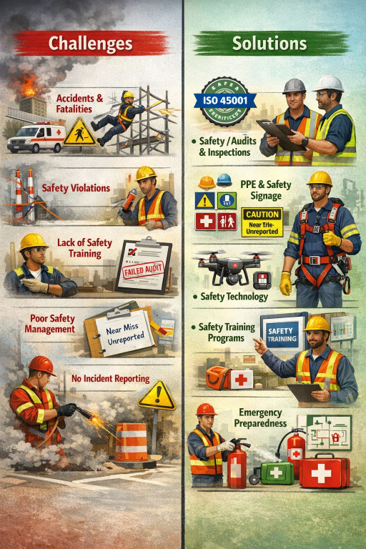
Construction continues to be one of the highest-risk sectors despite regulatory frameworks.
Problem Statement:
Safety is often treated as a compliance obligation rather than an integral part of design, planning, and skill development. SSDF emphasised that innovation must focus on design-stage hazard identification, role-based safety competence, and preventive risk management. Problems worth solving are those that embed safety into engineering decisions and workforce training, preventing incidents before they occur.
Sustainability: Integrating Environmental Goals into Practice
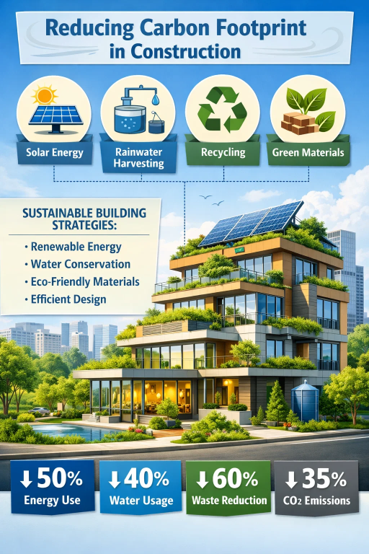
While sustainability is a widely stated objective, its translation into construction practices remains uneven.
Problem Statement:
Sustainability goals are frequently defined at policy or design stages but are weakly integrated into site-level execution. SSDF highlighted the need to solve problems related to resource efficiency, waste minimisation, safe material handling, and environmentally responsible construction methods. Sustainable infrastructure must also be safe, durable, and executable on site.
Construction of Resilient Infrastructure: Planning for Long-Term Risks
India’s infrastructure is increasingly exposed to climate change, extreme weather, and evolving usage.
Problem Statement:
Infrastructure is often designed for immediate functional needs without adequate consideration of long-term resilience. SSDF emphasised that problems worth solving include climate risk assessment, durability under stress conditions, and adaptive design. Resilient infrastructure ensures safety and serviceability over its intended lifespan.
Innovation in Infrastructure Asset Management: Beyond Construction
Innovation in civil engineering largely focuses on project delivery, with limited attention to post-construction performance.
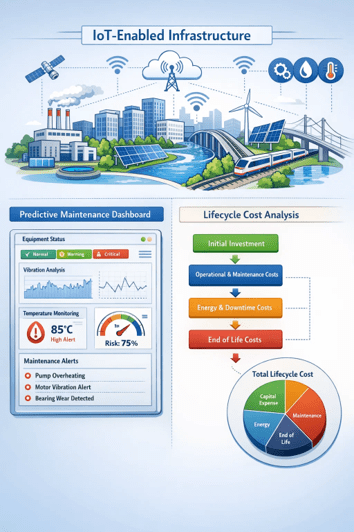
Problem Statement:
Asset management, inspection, and maintenance are insufficiently integrated into infrastructure planning. SSDF highlighted the need for data-driven inspection systems, preventive maintenance planning, and lifecycle-based asset management to ensure long-term safety and performance.
SSDF’s Contribution and Way Forward
At Building Bharat Sampaark, SSDF encouraged participants to observe real construction challenges, identify systemic gaps, and prioritise problems based on impact and scalability. SSDF reinforced that the most valuable innovations are those that improve construction quality, enhance safety, strengthen sustainability, build resilience, and extend asset life.
As India builds for the future, civil engineering must adopt a problem-first approach. Solving the right problems today is essential to creating infrastructure that is safe, high-quality, sustainable, resilient, and future-ready.