The Hidden Skill Deficit in EHS: Why Industry Readiness Remains a Challenge
1. Introduction: The Illusion of Readiness
2. The Real Problem: When Knowledge Doesn’t Translate into Capability
3. Where the Gaps Truly Exist
- The Practical Exposure Gap
- The Compliance vs. Understanding Divide
- Emergency Preparedness: The True Test of Capability
- The Digital Gap in a Rapidly Evolving EHS Landscape
- Incident Investigation: Moving Beyond Surface-Level Analysis
- Behavioural and Cultural Gaps
- Industry-Specific Skill Gaps
- Sustainability and the Expanding Scope of EHS
- Documentation and Reporting Deficiencies
4. The Systemic Challenge: Misalignment Between Training and Industry
5. SSDF: Bridging the Gap Between Training and Industry Readiness
6. Building Competency Through Industry-Aligned Skill Development
7. Conclusion: From Certification-Ready to Industry-Ready
8. Frequently Asked Questions (FAQs)
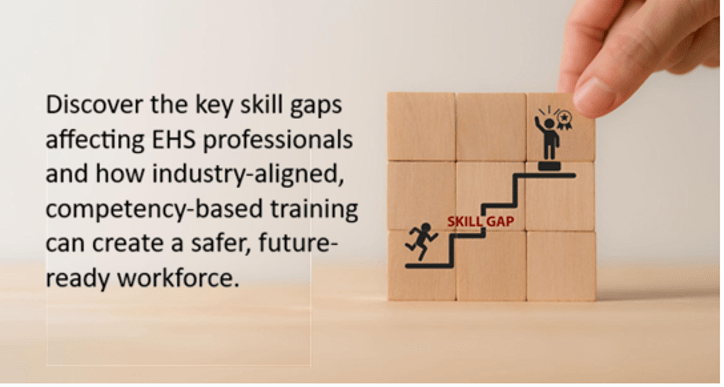
Across industries today, safety appears to be well-established. Trainings are conducted. Certifications are issued. Compliance frameworks are documented. On paper, organizations seem prepared to manage Environment, Health, and Safety (EHS) risks effectively.
And yet, incidents continue to occur.
Near misses go unreported. Emergency responses reveal gaps. Investigations often fail to prevent recurrence. It raises an uncomfortable but necessary question:
Are we truly industry-ready or merely certification-ready?
At the Safety Skill Development Foundation (SSDF), this question is not theoretical. It emerges consistently across sectors, from construction sites and manufacturing plants to oil & gas operations, revealing a deeper issue: a hidden skill deficit that traditional training models have not addressed.
How Industry Can Bridge These Gaps
✓ Continuous Training: Regular upskilling and competency development.
✓ Practical Learning: Hands-on simulations, drills, and workplace exercises.
✓ Digital Adoption: Use EHS software, analytics, and digital reporting systems.
✓ Strong Safety Culture: Encourage leadership commitment and worker participation.
✓ Industry-Aligned Certification: Training programs linked to current industry requirements.
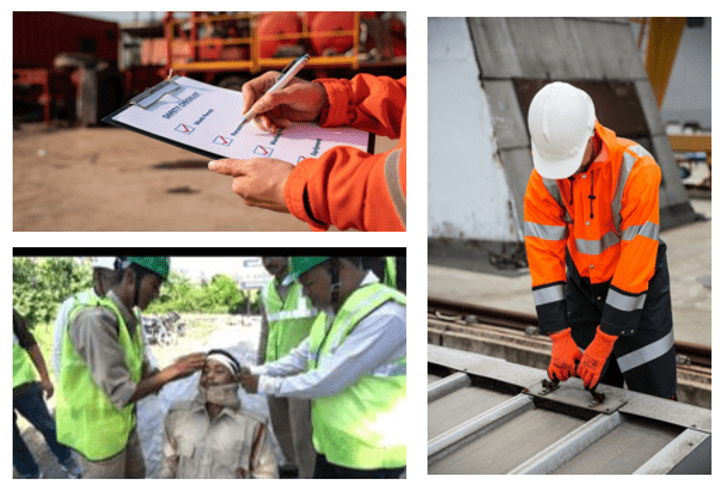
The Real Problem: When Knowledge Doesn’t Translate into Capability
Most EHS professionals today are not untrained; they are underprepared. They understand safety principles. They are familiar with regulations. They have completed certifications.
But when faced with real-world scenarios:
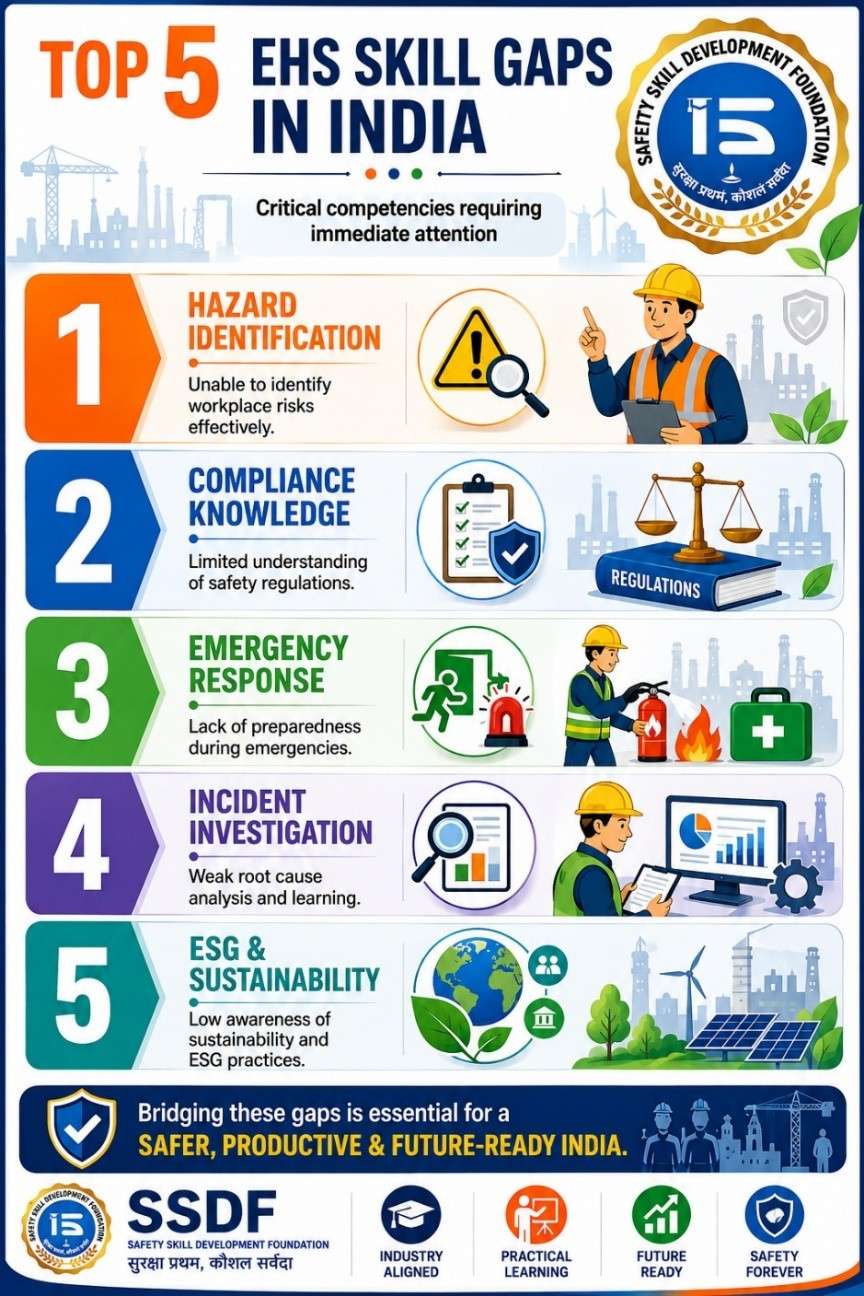
- Hazard identification becomes a checklist exercise
- Risk assessments lack contextual depth
- Decision-making slows under pressure
This gap between knowing and doing is where real risk lies.
Recognizing this, SSDF has shifted its focus from knowledge dissemination to competency development, ensuring that training reflects the realities of the workplace, not just the requirements of a curriculum.
Where the Gaps Truly Exist
The skill deficit in EHS is not a single issue; it is a combination of interconnected gaps that impact overall safety performance.
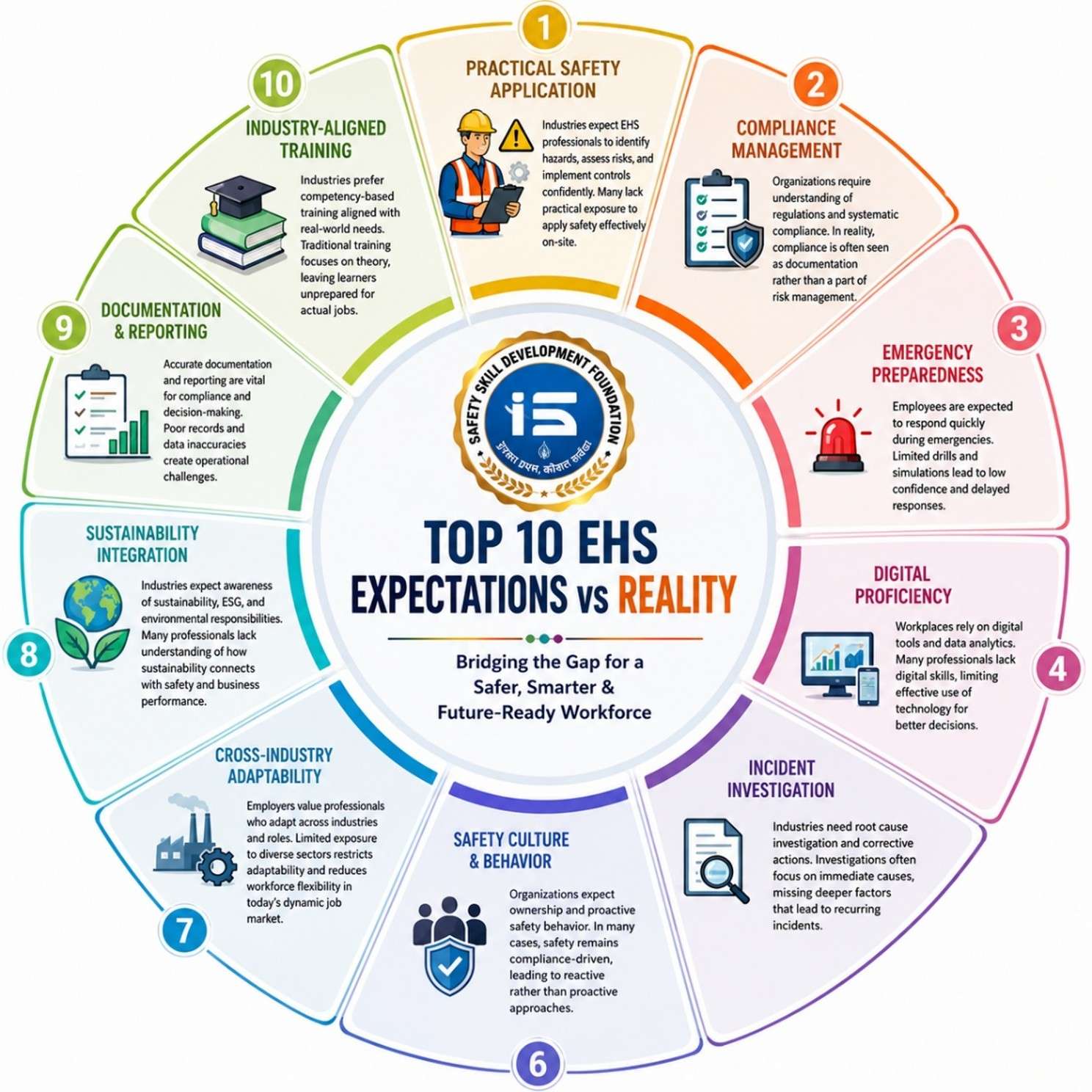
- The Practical Exposure Gap
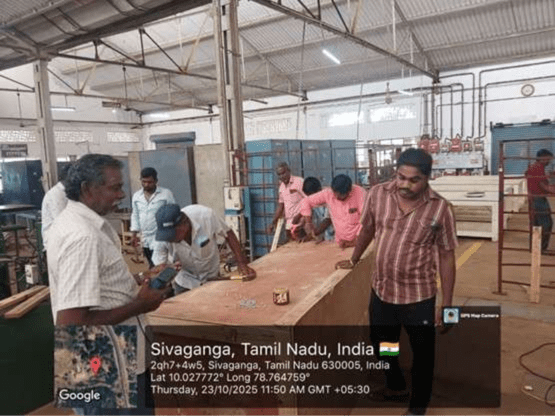

A significant portion of training remains classroom-based, limiting exposure to real-life scenarios. Without hands-on experience, professionals struggle to interpret risks in dynamic environments.
SSDF addresses this through scenario-based training and practical simulations, aligned with NSQF standards, enabling learners to apply knowledge in realistic settings rather than theoretical constructs.
2. The Compliance vs. Understanding Divide
In many organizations, safety compliance becomes a documentation exercise rather than an operational priority. While professionals may be aware of regulations, their ability to interpret and implement them effectively remains limited.
To bridge this, SSDF emphasizes competency-based assessments, ensuring that individuals are evaluated not just on what they know, but on how effectively they can apply that knowledge in real situations.
3. Emergency Preparedness: The True Test of Capability
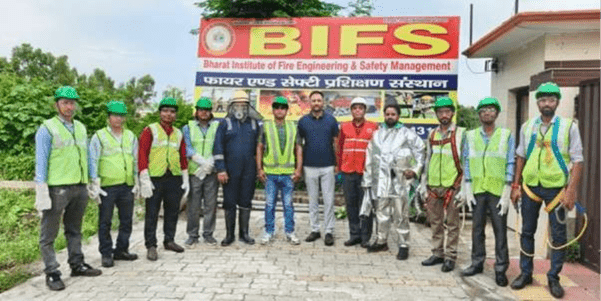
Emergency drills are conducted regularly, yet real incidents often expose hesitation and lack of coordination.
The difference lies in preparedness versus performance.
SSDF integrates simulation-driven training modules that build confidence, situational awareness, and decision-making under pressure, transforming response from reactive to controlled.
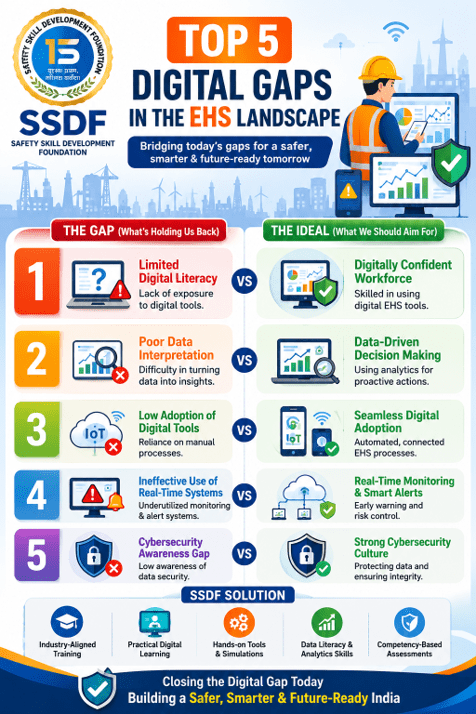
- The Digital Gap in a Rapidly Evolving EHS Landscape
EHS is becoming increasingly data-driven, with digital tools, real-time monitoring systems, and analytics playing a crucial role.
However, many professionals lack the skills to effectively use these tools or interpret the data they generate.
SSDF incorporates digital awareness and exposure to modern safety systems within its training ecosystem, ensuring that the workforce is equipped for the evolving demands of Industry 4.0.
- Incident Investigation: Moving Beyond Surface-Level Analysis
While incident reporting mechanisms exist, the ability to conduct thorough root cause analysis is often limited. This results in recurring issues and missed opportunities for systemic improvement. SSDF’s approach focuses on building analytical and investigative competencies, enabling professionals to identify underlying causes rather than just immediate triggers.

- Behavioural and Cultural Gaps
Safety is not just a system; it is a culture.
Yet, in many organizations, safety remains confined to EHS departments rather than being embedded across all levels. Developing ownership, accountability, and proactive risk behaviour is critical.
SSDF integrates behavioural safety and leadership components into its programs, reinforcing the idea that safety is a shared responsibility.
- Industry-Specific Skill Gaps
Different industries present unique risk profiles:
- Construction requires expertise in work-at-height and scaffolding safety
- Manufacturing demands machine safety and lockout-tagout practices
- Oil & Gas focuses on process safety and emergency response
A generic approach to training cannot address these nuances.
SSDF develops industry-aligned Qualification Packs and sector-specific training frameworks, ensuring relevance and applicability across domains.
- Sustainability and the Expanding Scope of EHS
EHS is no longer limited to safety compliance; it now intersects with sustainability and ESG priorities. Professionals are increasingly expected to understand environmental impact, resource efficiency, and sustainable practices.
SSDF is actively aligning its programs to incorporate sustainability-linked competencies, preparing the workforce for the next phase of EHS evolution.
- Documentation and Reporting Deficiencies
Accurate documentation and reporting are critical for audit readiness and informed decision-making. However, gaps in technical writing, data interpretation, and structured reporting continue to persist. SSDF emphasizes documentation accuracy and reporting competencies as core elements of its certification framework, strengthening transparency and accountability.
The Systemic Challenge: Misalignment Between Training and Industry
At the heart of the skill deficit lies a broader systemic issue; training programs that are not aligned with industry realities.
Many curricula remain:
- Theory-heavy
- Outdated
- Disconnected from workplace challenges
This leads to a workforce that is certified, but not fully job-ready.
As an NCVET-recognized Awarding Body, SSDF addresses this gap through:
- Industry-aligned Qualification Packs
- Standardized certification systems
- Strong industry linkages
- Outcome-driven skilling models
SSDF: Bridging the Gap Between Training and Industry Readiness
The challenge facing the EHS sector today is not the lack of training opportunities but the gap between training outcomes and workplace expectations. Industries require professionals who can identify hazards, manage compliance, respond to emergencies, investigate incidents, utilize digital tools, and contribute to a strong safety culture. However, many individuals enter the workforce with theoretical knowledge but limited practical competence.
The Safety Skill Development Foundation (SSDF) was established to address this challenge. As a not-for-profit organization registered under Section 8 of the Companies Act, 2013, and recognized as an Awarding Body by the National Council for Vocational Education and Training (NCVET), Ministry of Skill Development & Entrepreneurship, Government of India, SSDF is committed to building a competency-driven safety skill ecosystem for India.


SSDF’s approach goes beyond conventional training. The foundation focuses on developing industry-relevant qualifications, National Occupational Standards (NOS), competency-based assessments, and certification systems aligned with the National Skill Qualification Framework (NSQF). The objective is simple: transform learners from being certification-ready to becoming industry-ready.
Recognizing the evolving demands of workplaces, SSDF promotes practical learning, simulation-based training, industry-aligned curriculum, and continuous skill development. Its qualification frameworks are designed to address critical competency areas such as hazard identification, compliance management, emergency preparedness, incident investigation, digital safety systems, sustainability integration, documentation, and behavioural safety.
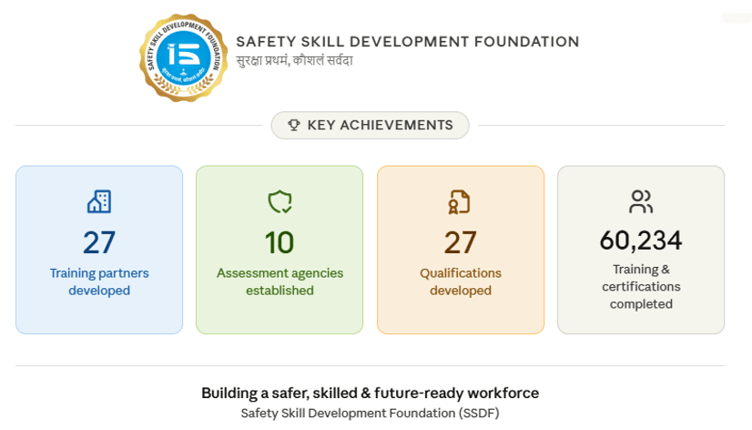
Over the past five years, SSDF has made significant contributions to strengthening India’s occupational safety ecosystem. The foundation has developed 27 Qualifications, established 27 Training Partners and 10 Assessment Agencies, and facilitated more than 60,234 training and certification outcomes across the country. These milestones reflect SSDF’s commitment to creating a skilled workforce capable of meeting both current and future industry requirements.
Through collaboration with industries, training institutions, assessment agencies, and safety professionals, SSDF continues to bridge the gap between workforce capability and industry expectations. By promoting competency-based learning and nationally recognized certification pathways, SSDF is helping build a safer, more productive, and future-ready workforce for India.
Conclusion
Bridging the EHS skill deficit requires more than awareness; it requires structured competency development, industry-aligned qualifications, standardized assessments, and continuous upskilling. Through its NSQF-aligned programs and industry-focused training ecosystem, SSDF is contributing to the development of a skilled, safety-conscious workforce capable of meeting the evolving demands of India’s industries.
FAQs
What are the most critical skill gaps in EHS today?
The most critical gaps include lack of practical hazard identification, weak incident investigation skills, poor understanding of safety regulations, and limited behavioral safety competencies.
Why do EHS professionals struggle despite having certifications?
Many training programs are theory-heavy and lack firsthand exposure, real-world case studies, and industry-relevant applications.
How do skill gaps in EHS impact organizations?
They lead to increased workplace incidents, regulatory non-compliance, financial losses, and reduced safety culture effectiveness.
What role does technology play in EHS skill gaps?
Modern EHS roles require data analysis, digital reporting, and use of safety management systems—skills often missing in the current workforce.
How can industries bridge EHS skill gaps effectively?
Through industry-aligned curriculum, practical training, simulations, apprenticeships, and continuous upskilling programs.
Why is multi-industry exposure important for EHS professionals?
It ensures adaptability, broader hazard understanding, and improved ability to implement safety practices across different sectors.
How does NSQF alignment help in reducing skill gaps?
NSQF ensures standardized, competency-based training with clear learning outcomes, improving employability and industry readiness