Monsoon Workplace Safety: Protecting People, Preventing Incidents
- Introduction
- Why Monsoon Workplace Safety Matters
- SSDF’s Role in Building a Monsoon-Ready Workforce
- 15 Essential Monsoon Workplace Safety Precautions
- Electrical Safety
- Slip, Trip & Fall Prevention
- Construction Site Precautions
- Emergency Preparedness
- Industry-Specific Safety Considerations
- How Safety Training Makes the Difference
- Conclusion
- Frequently Asked Questions (FAQs)
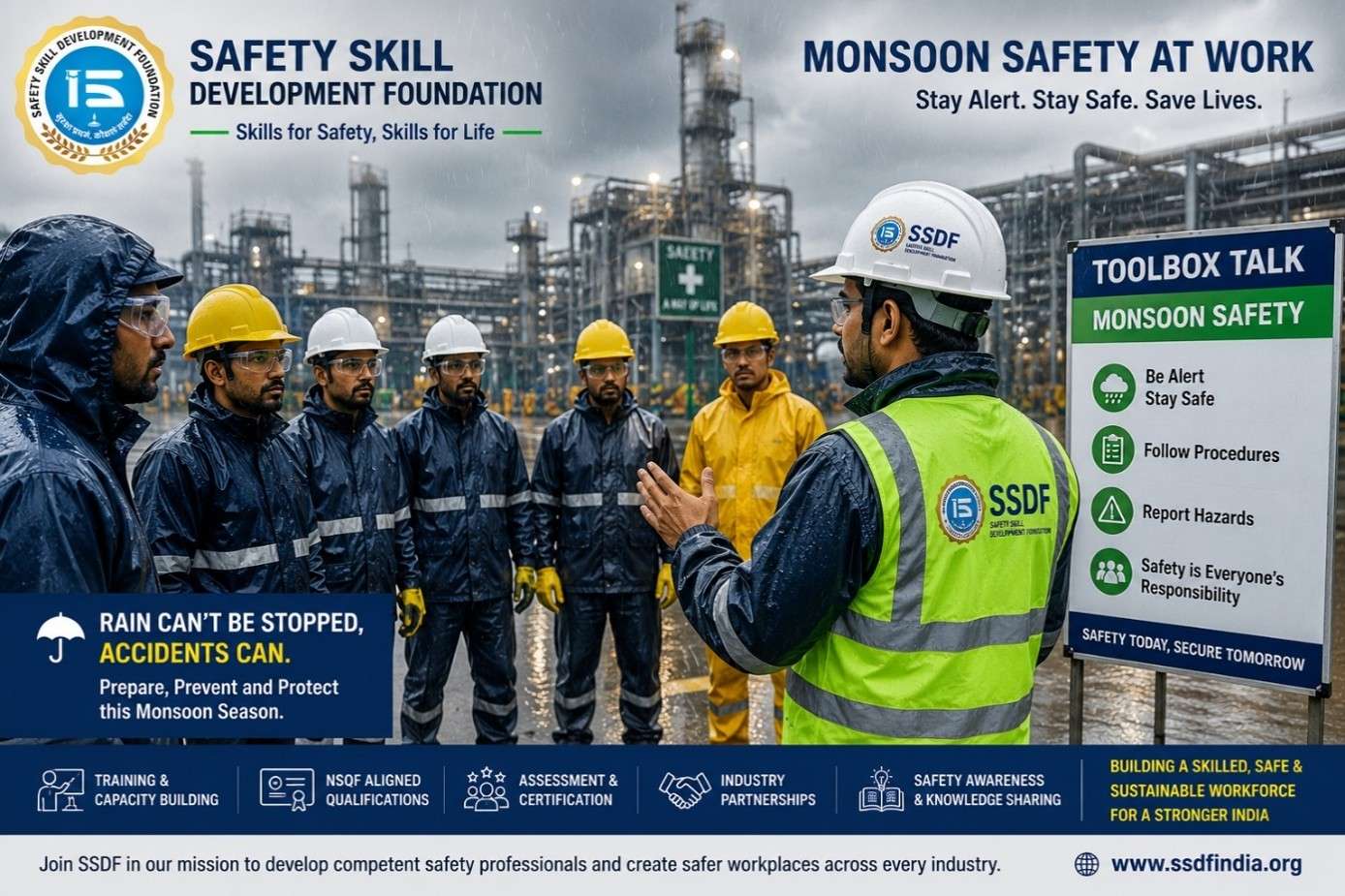
The monsoon season brings much-needed relief from the summer heat, but it also introduces significant workplace hazards. Heavy rainfall, waterlogging, slippery surfaces, poor visibility, electrical risks, and unstable working conditions increase the likelihood of workplace incidents across industries. For organizations, monsoon safety is not only about compliance, but it is also about protecting lives, ensuring business continuity, and creating a proactive safety culture.
The Safety Skill Development Foundation (SSDF) believes that the most effective way to reduce workplace incidents is by developing competent, safety-conscious professionals through structured skill development, industry-recognized qualifications, and continuous learning.
Why Monsoon Workplace Safety Matters
Every year, organizations experience an increase in incidents during the rainy season due to:
- Wet and slippery floors
- Electrical hazards caused by moisture
- Waterlogged work areas
- Reduced visibility
- Lightning risks
- Structural instability
- Increased vehicle movement hazards
- Delays in emergency response
Many of these incidents are preventable through proper planning, employee awareness, and competent safety supervision.
SSDF’s Role in Building a Monsoon-Ready Workforce
Safety does not begin with equipment; it begins with skilled people.
SSDF works towards strengthening India’s occupational safety ecosystem by developing industry-relevant qualifications, promoting structured safety training, supporting competency-based assessments, and encouraging organizations to build a strong safety culture.
Through its nationally aligned occupational standards and certification programs, SSDF helps organizations prepare professionals who can identify hazards, implement preventive measures, and respond effectively during seasonal risks such as the monsoon.
A trained workforce is the first line of defence against workplace accidents.
15 Essential Monsoon Workplace Safety Precautions Every Industry Should Follow
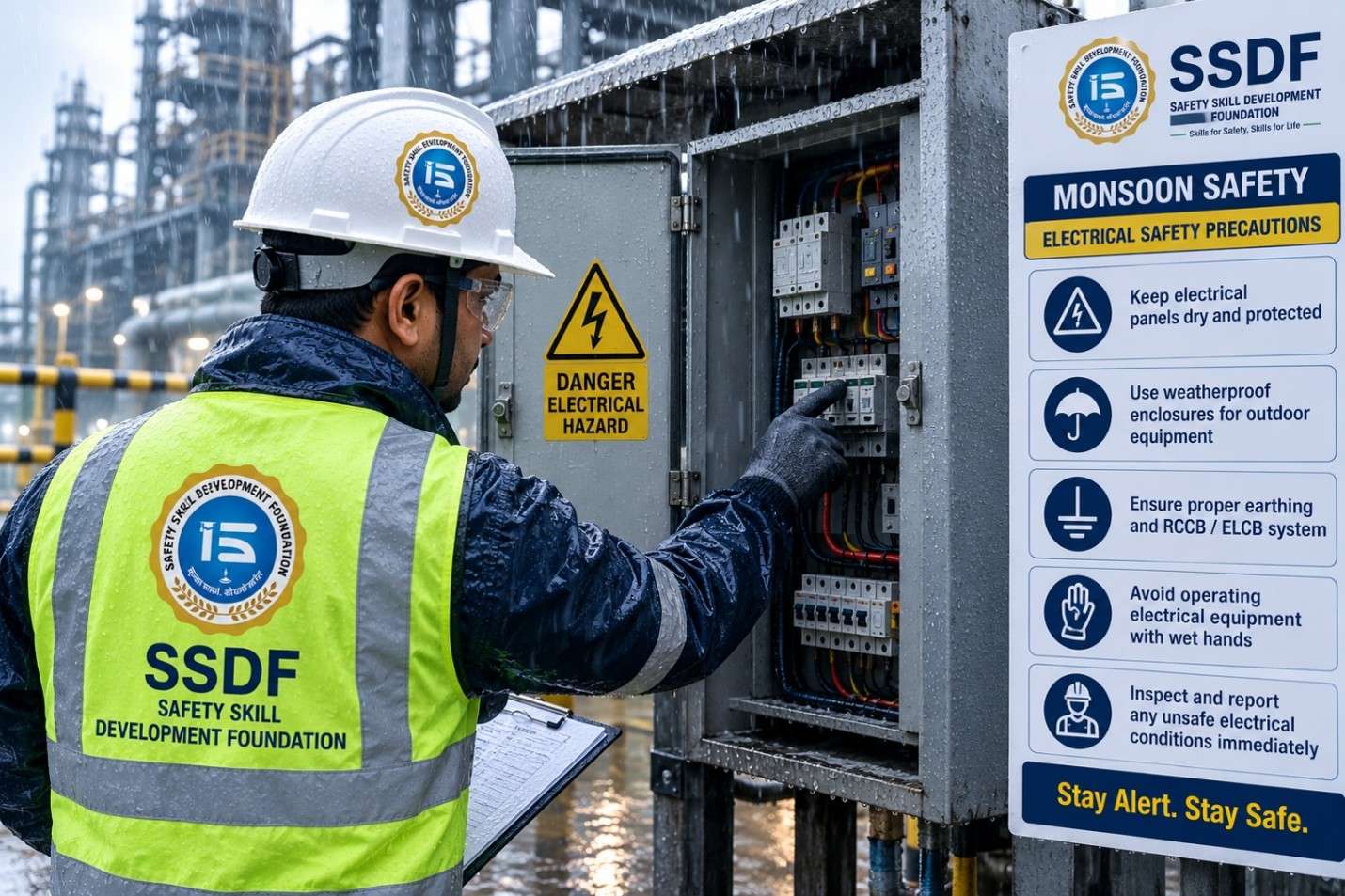
1. Electrical Safety :
Electricity and water are a dangerous combination.
Organizations should ensure:
anizations should ensure:
✓ Inspect electrical panels regularly
- Damaged insulation, exposed wiring, and temporary connections should be repaired immediately.
✓ Protect outdoor electrical installations
- Use weatherproof enclosures for electrical equipment exposed to rain.
✓ Test Earthing and ELCB/RCCB Systems
- Proper earthing and functional leakage protection devices significantly reduce electrical accidents
✓ Never operate electrical equipment with wet hands
- Employees should be trained to recognize unsafe conditions before operating machinery.
✓ Isolate flooded electrical areas
- Power supply should be disconnected immediately if electrical installations are submerged.
2. Slip, Trip & Fall Prevention:
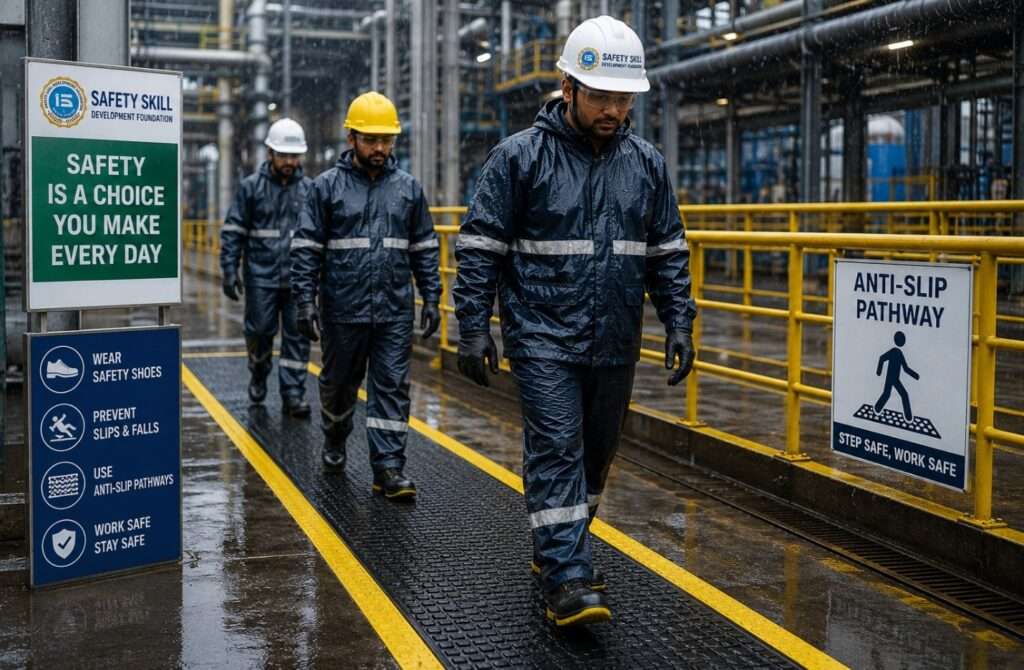
Slip-and-fall incidents are among the most common workplace accidents during the monsoon.
Organizations should:
✓ Keep walkways dry
- Use absorbent mats and anti-slip flooring where possible.
✓ Install caution signage
- Display “Wet Floor” signs immediately after rainfall or cleaning.
✓ Maintain proper housekeeping
- Remove mud, water, cables, and debris from walking paths.
✓ Ensure adequate lighting
- Poor visibility increases trip hazards during cloudy weather.
✓ Provide slip-resistant safety footwear
- Proper PPE significantly reduces injuries.
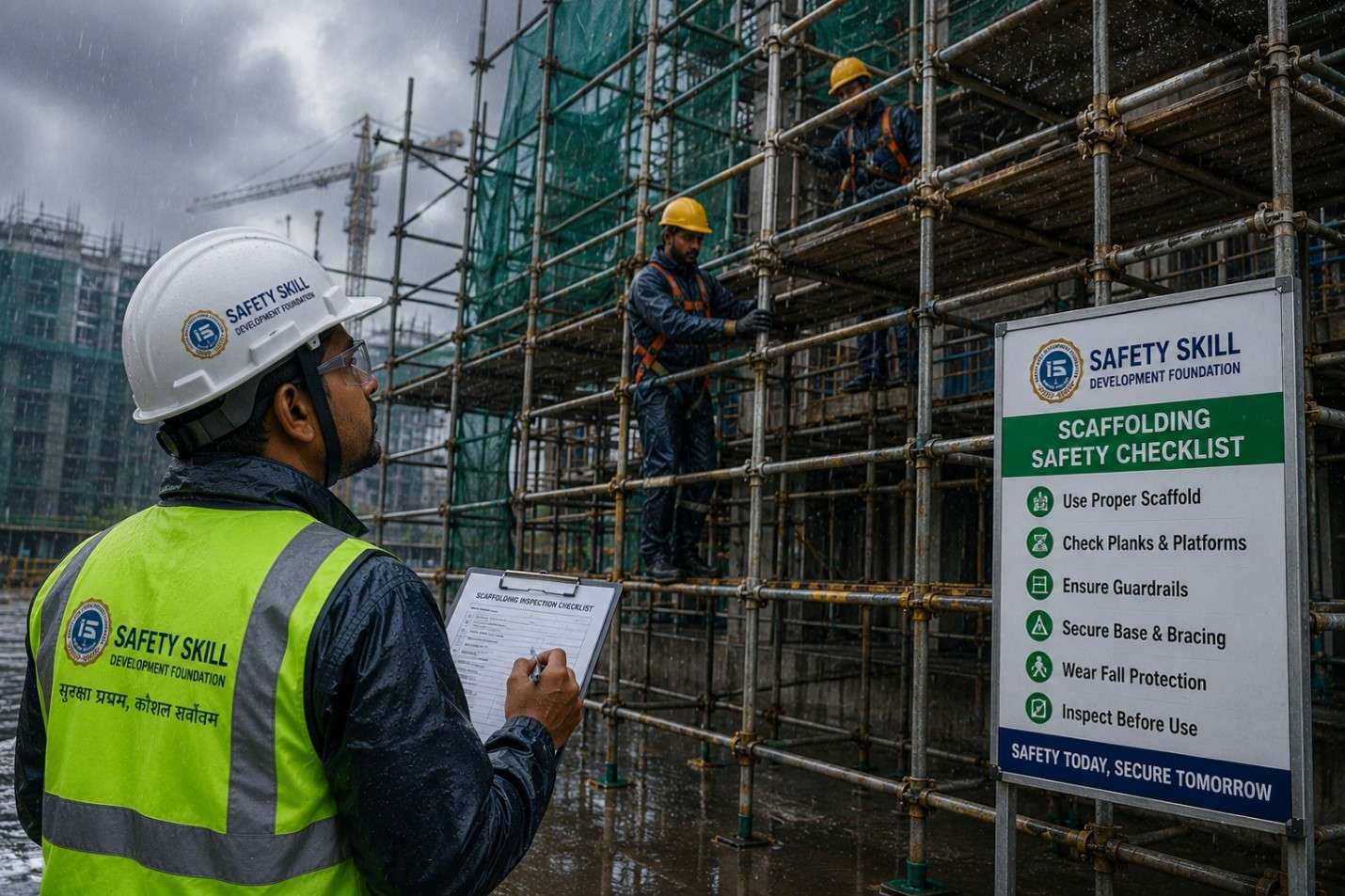
3. Construction Site Precautions:
Construction activities become significantly more hazardous during heavy rains.
Essential precautions include:
✓ Inspect scaffolding daily
- Rain can weaken platforms and increase slipping hazards.
✓ Secure excavation sites
- Prevent collapse through proper shoring and water removal.
✓ Suspend work during lightning
- Outdoor work at height should stop immediately during thunderstorms.
✓ Check lifting equipment
- Inspect cranes, slings, and lifting accessories before use.
✓ Cover construction materials
- Protect cement, electrical equipment, and tools from moisture.
4. Emergency Preparedness:
Preparedness saves lives.
Organizations should:
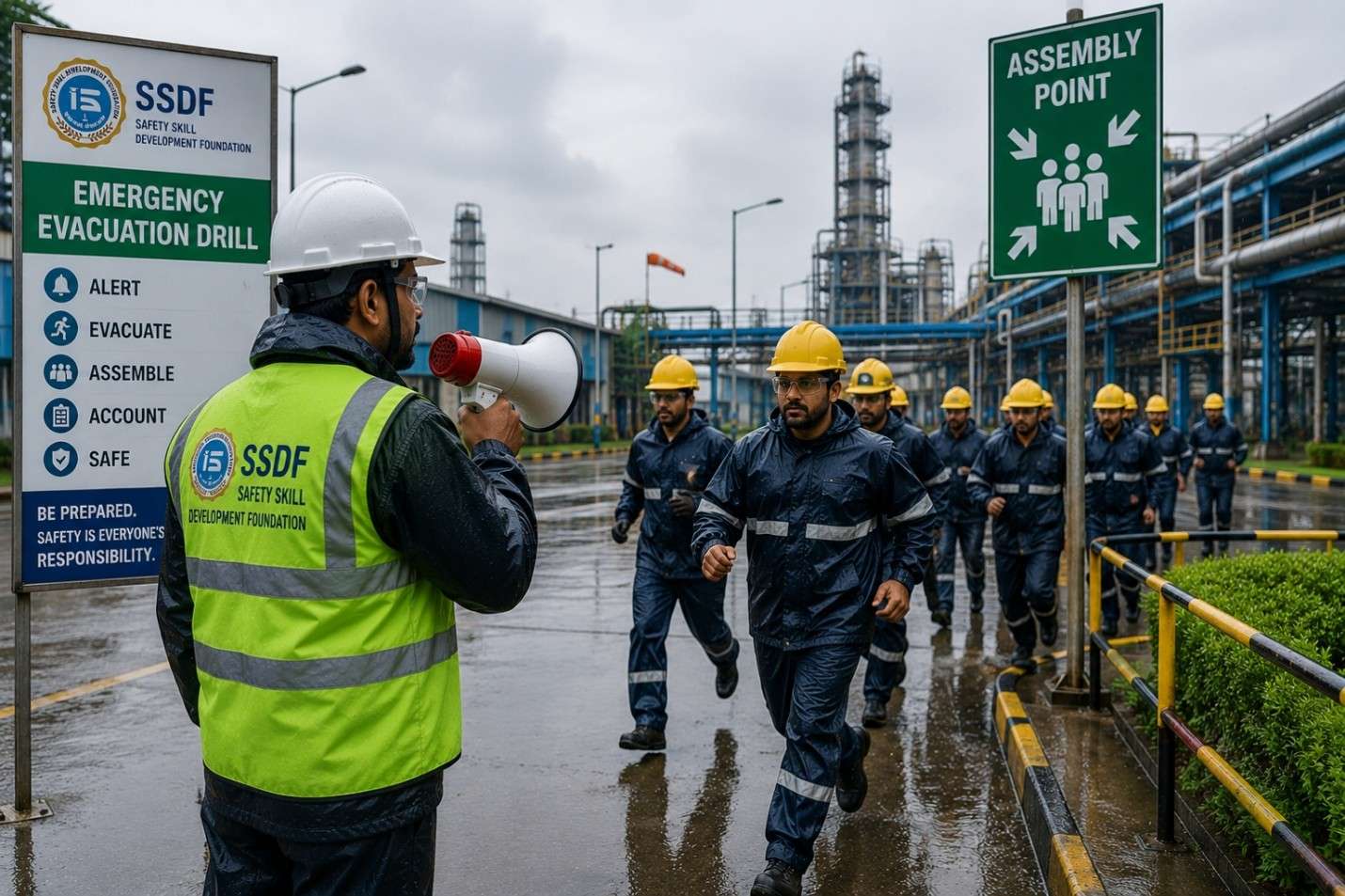
✔ Update emergency response plans
- Include flooding and severe weather scenarios.
✔ Conduct emergency drills
- Employees should know evacuation routes and assembly points.
✔ Maintain emergency communication systems
- Ensure backup communication methods are available.
✔ Keep emergency equipment ready
- First-aid kits, emergency lighting, rescue equipment, and pumps should be inspected.
✔ Monitor weather alerts
- Track weather forecasts and issue safety advisories before severe rainfall.
Industry-Specific Monsoon Safety
Different industries face different challenges during the rainy season.
| Industry | Major Monsoon Risks |
|---|---|
| Construction | Falls, excavation collapse, lightning |
| Manufacturing | Electrical hazards, slips |
| Warehousing | Wet floors, material handling |
| Oil & Gas | Corrosion, confined spaces |
| Power | Electrical faults, transmission risks |
| Mining | Water ingress, slope failure |
| Logistics | Poor visibility, road safety |
Why Training Makes the Difference
Policies alone cannot prevent accidents.
Competent people can.
Organizations should invest in:
- Hazard Identification
- Risk Assessment
- Electrical Safety Training
- Emergency Response
- Behaviour-Based Safety
- PPE Awareness
- Toolbox Talks
- Supervisor Development
SSDF continues to support industries by promoting competency-based safety training that enables workers and supervisors to recognize hazards, take preventive action, and contribute to safer workplaces throughout the year.
Conclusion
The monsoon season presents unique workplace challenges, but these risks can be effectively managed through planning, awareness, and competent safety practices.
By implementing preventive measures, strengthening emergency preparedness, and investing in workforce skill development, organizations can reduce incidents, improve operational resilience, and foster a stronger safety culture.
At Safety Skill Development Foundation (SSDF), we believe that building skilled safety professionals is essential to creating safer workplaces across every industry. Through industry-aligned training, nationally recognized qualifications, and continuous capacity building, SSDF remains committed to supporting organizations in developing a competent, future-ready workforce capable of managing seasonal and everyday workplace risks.
FAQs
Why is monsoon workplace safety important?
Monsoon conditions increase the risk of electrical accidents, slips and falls, flooding, lightning, and equipment damage, making preventive measures essential.
Which industries are most affected during the monsoon?
Construction, manufacturing, logistics, mining, oil & gas, power, infrastructure, and warehousing are among the sectors most exposed to monsoon-related hazards.
What is the biggest electrical risk during the rainy season?
Water ingress into electrical systems can lead to electric shock, short circuits, equipment failure, and fire if proper protection measures are not in place.
How can organizations reduce slip, trip, and fall incidents?
By maintaining good housekeeping, using anti-slip flooring, placing warning signage, improving drainage, ensuring adequate lighting, and providing slip-resistant safety footwear.
How does SSDF contribute to workplace safety?
SSDF promotes a skilled and safety-conscious workforce through competency-based training, industry-relevant qualifications, assessment and certification, helping organizations strengthen their occupational safety culture.