Blogs
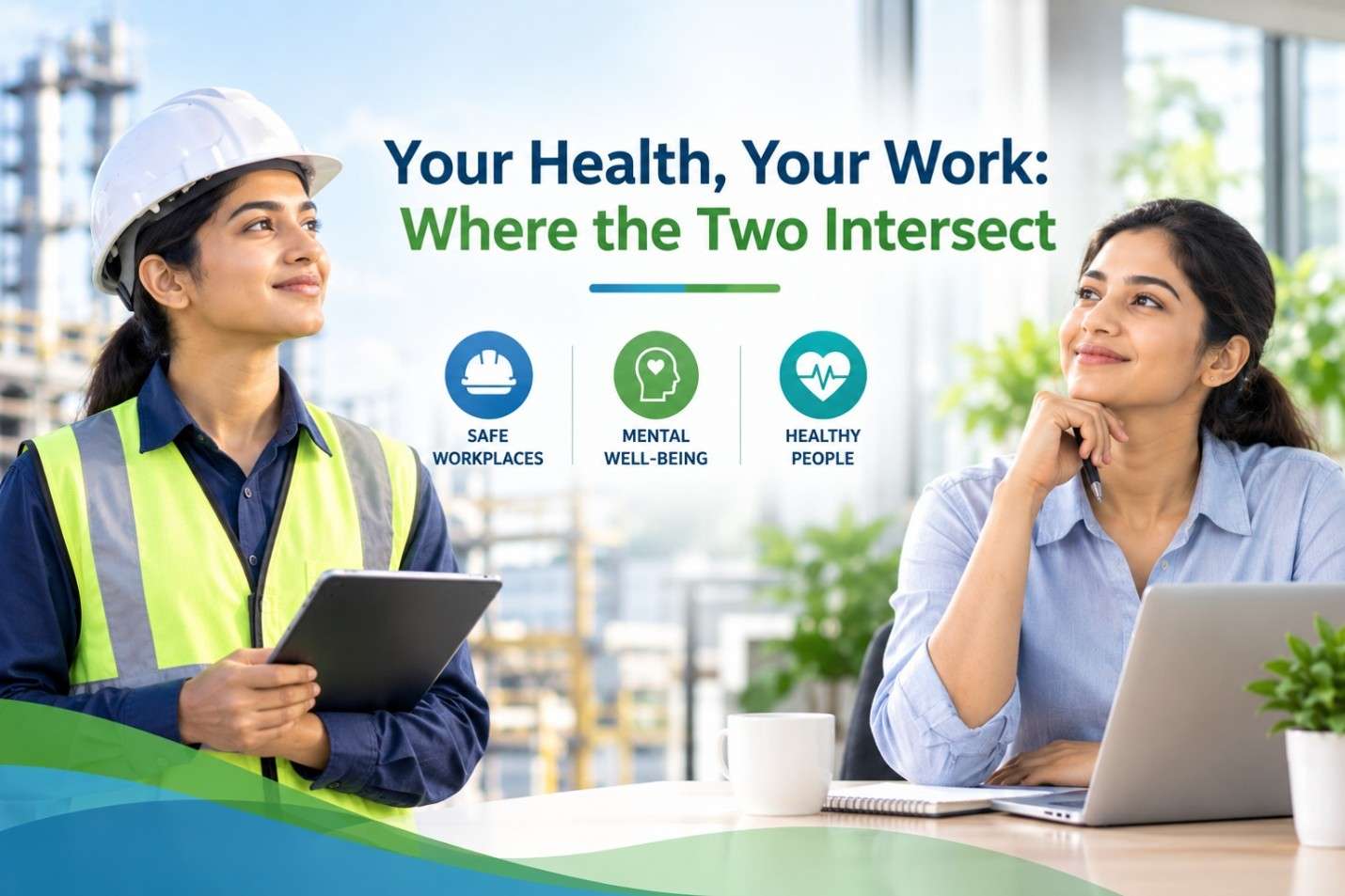
Your Health, Your Work: Where the Two Intersect
Occupational health is about creating workplaces where people can stay physically healthy, mentally supported, and protected from work-related risks. It combines risk assessment, ergonomics, health surveillance, workplace hygiene, training, and employee engagement to prevent harm before it occurs. A strong occupational health program contributes to healthier employees, safer workplaces, and sustainable organizational well-being.
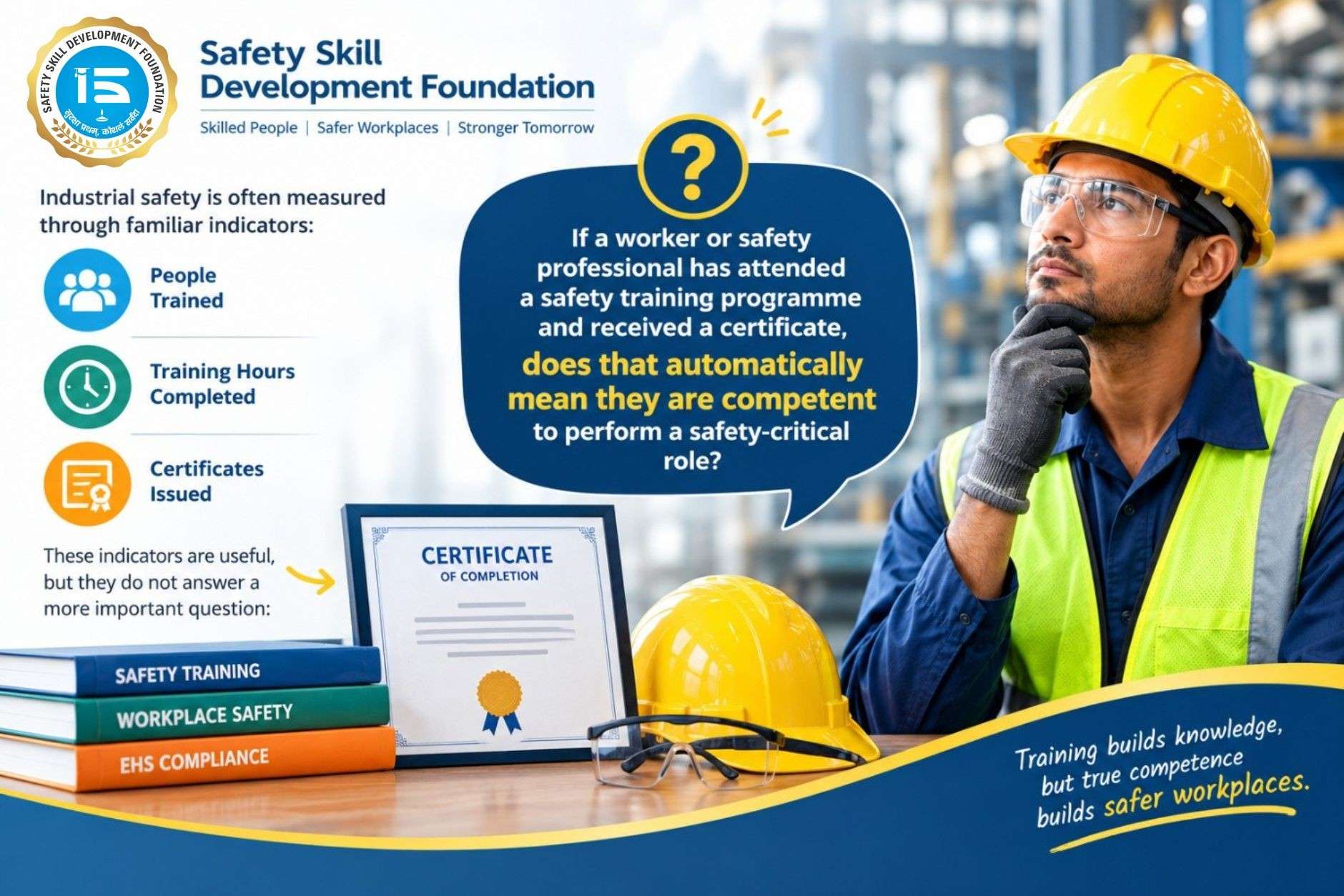
Beyond Training: Why India Needs a Complete Safety Competency Ecosystem
India’s industrial growth needs more than safety training and certificates. A strong safety competency ecosystem should combine occupational standards, role-based qualifications, skilled trainers, practical assessments, competent assessors, micro-credentials, industry participation, and continuous upskilling. The goal is to ensure that workers and safety professionals can demonstrate the knowledge, skills, and capability required to perform safety-critical roles safely and effectively.
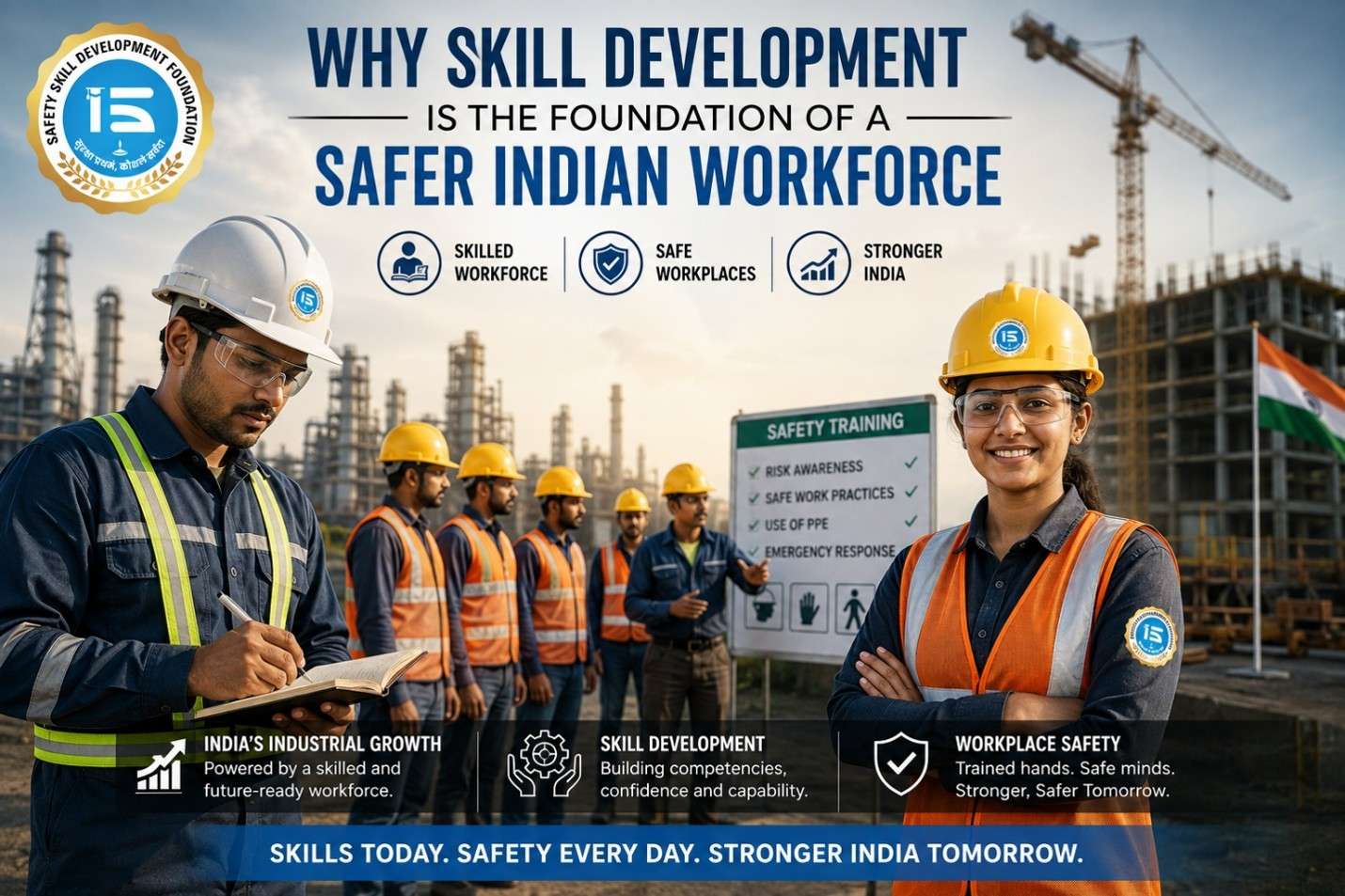
Why Skill Development Is the Foundation of a Safer Indian Workforce
Skill development is essential for building a safer, more productive Indian workforce. Through NCVET-recognized qualifications, structured training, assessment, and certification, the Safety Skill Development Foundation (SSDF) equips workers and safety professionals with the competence to identify hazards, follow regulations, prevent incidents, and strengthen workplace safety culture. By addressing India’s industrial skill gap, SSDF supports safer growth, better employability, stronger EHS compliance, and sustainable national development.
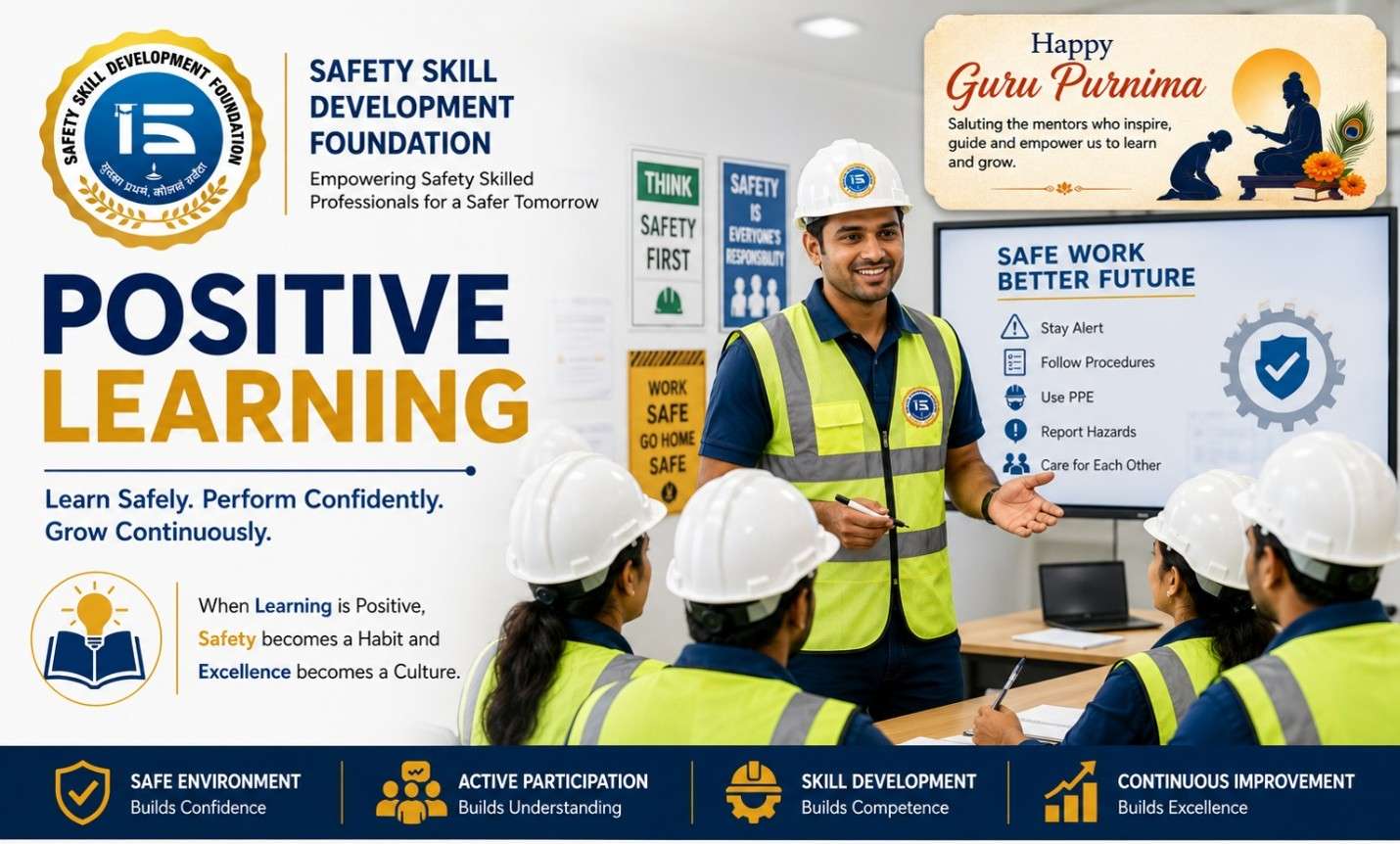
Positive Learning in the Workplace: Building Skills, Confidence and Performance
Positive learning helps employees develop skills, confidence, competence, and safer work habits. It highlights key elements of a supportive learning environment such as active participation, open communication, psychological safety, constructive feedback, and practical training methods. The article also discusses learning principles, performance indicators, barriers, age-related needs, and modern approaches like experiential and problem-based learning. By fostering continuous learning, organizations can enhance engagement, knowledge retention, productivity, work quality, safety, and long-term growth.
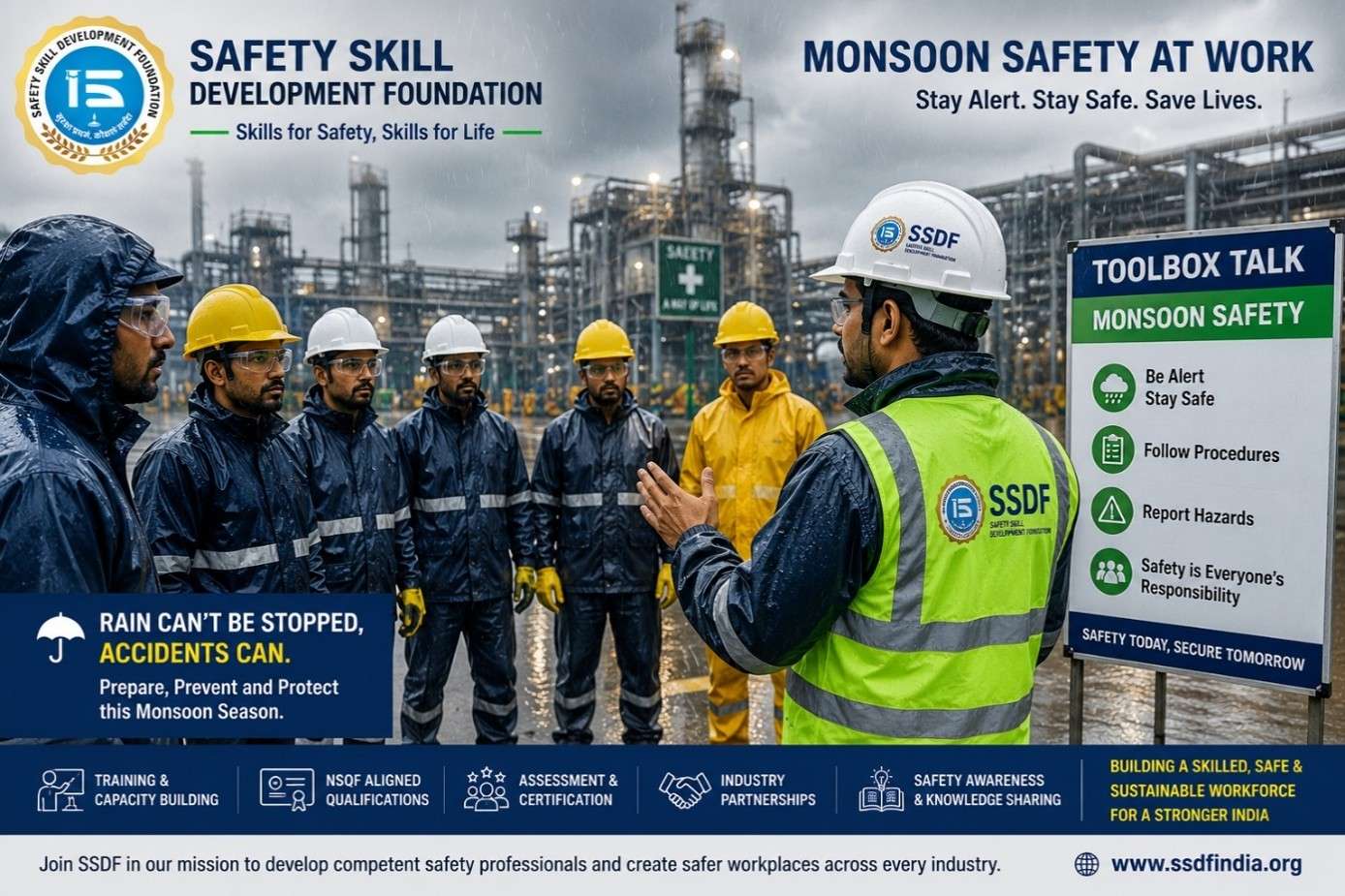
Monsoon Workplace Safety: Protecting People, Preventing Incidents
Explore 15 essential monsoon workplace safety precautions to reduce electrical hazards, slips, falls, flooding, lightning risks and construction-site incidents. Learn how proper planning, emergency preparedness and competency-based safety training help industries protect workers and maintain safe operations during the rainy season.
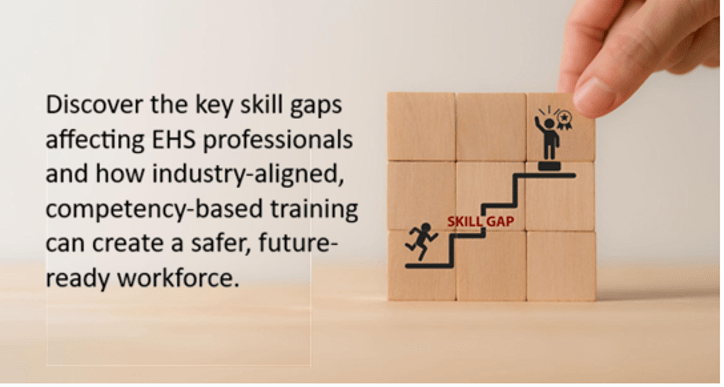
The Hidden Skill Deficit in EHS: Why Industry Readiness Remains a Challenge
Despite growing awareness, certifications, and compliance programs, many organizations continue to face workplace incidents and safety challenges. The root cause often lies in a hidden EHS skill deficit where theoretical knowledge fails to translate into real-world capability. This blog explores the critical gaps affecting industry readiness, including practical exposure, emergency preparedness, digital competency, incident investigation, behavioural safety, and industry-specific expertise. It also highlights how the Safety Skill Development Foundation (SSDF) is helping bridge these gaps through competency-based, industry-aligned training and certification programs designed to build a safer, more future-ready workforce.